A conference transport plan often includes more than a journey to the venue. Speakers, sponsors and delegates may land on different flights, stay at different hotels and leave at different times. A clear movement schedule helps the organiser give each guest practical pickup instructions and helps the chauffeur coordinator match vehicles to actual demand.
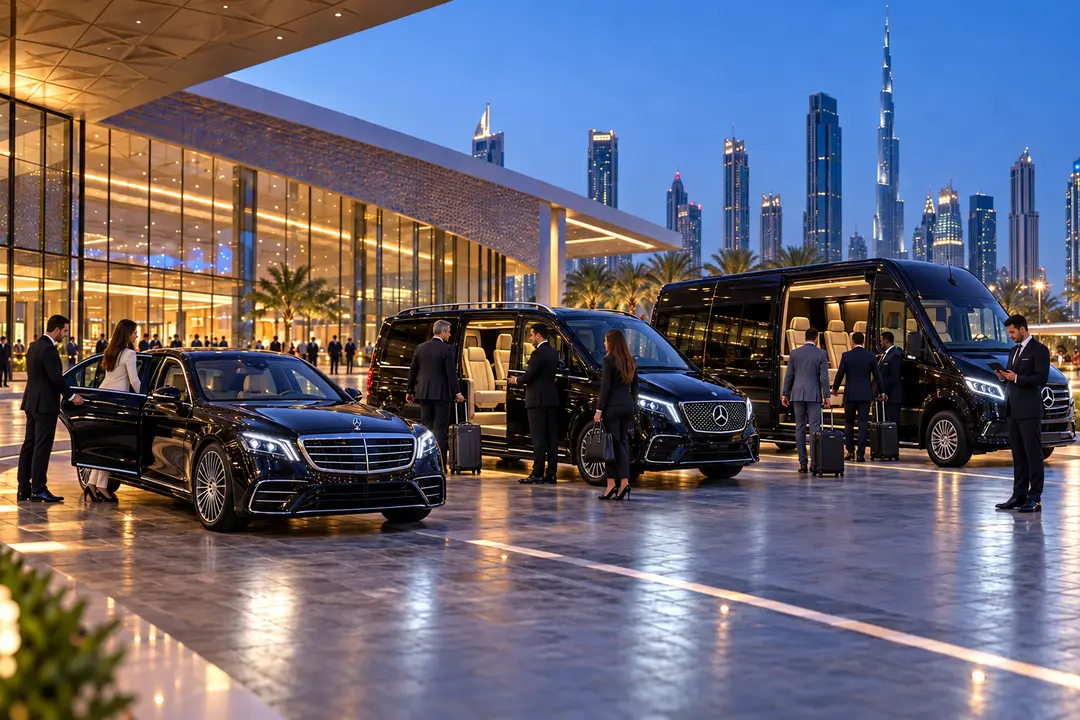
Group guests by arrival and departure
Build a guest list with flight numbers, arrival airports and terminals, hotel addresses, passenger counts and luggage. Separate confirmed arrivals from tentative ones. Identify guests who need individual vehicles, groups who can travel together and anyone requiring extra assistance. Share changes as flights and attendance are finalised.
A private aviation guest needs the operator or facility name rather than only a flight reference. If your event has a VIP speaker with a separate arrival protocol, tell the reservation team about the contact person and any access instructions before the transfer is scheduled.
Confirm the venue entrance and loading plan
Ask the event venue which entrance should be used for guest drop-offs and which area is available for vehicles to wait or collect passengers. A hotel, exhibition venue or conference centre may have different entrances for delegates, VIPs and suppliers. Pass the final entrance information to the chauffeurs and guests so they do not have to find one another at a busy curbside.
Consider the event’s busiest arrival and departure windows. Several vehicles arriving at exactly the same time may create a queue. A staged schedule and an on-site coordinator can make guest movements easier to manage. Venue permissions and parking arrangements should be confirmed for the specific event.
Choose vehicles for each group
An executive sedan may suit one or two travellers with light luggage. A Mercedes V-Class, Sprinter or private coach category may be more suitable for groups, subject to the assigned vehicle’s verified seating and luggage space. Do not calculate the vehicle count from seats alone: airport bags, exhibition materials and last-minute guest changes also matter.
For a high-profile guest, specify any requested vehicle category, privacy preference and the name of the person who can approve changes. A representative model image does not guarantee a particular colour, trim or vehicle unless it has been confirmed in the quotation.
Give every movement a lead contact
Appoint one organiser who maintains the master schedule and a local contact for each airport, hotel or venue movement. The team should know whom to call if a flight is delayed or a session ends late. Share the guest’s contact number only with those who need it to coordinate the journey, and make sure a passenger knows where to meet the chauffeur.
For multi-day events, separate the movements by day. Include any dinners, site visits or airport returns instead of assuming the original venue transfer covers them. Confirm the service period, waiting, extra hours, tolls, parking and cancellation terms before the event begins.
Prepare a useful quotation request
- Event dates, venue addresses, entrances and daily start and end times.
- Guest groups, flight details, hotels and luggage estimates.
- VIP requirements, special assistance and on-site contacts.
- Proposed vehicles, return transfers and schedule flexibility.
See our Dubai event chauffeur service page for service options. Send your initial event details to ECS Dubai with the itinerary in the notes; for a larger group, our team can review a detailed movement schedule with you and provide a quotation before bookings are confirmed.
If your conference includes a sequence of executive meetings, use our executive roadshow planning guide to organise the stops and timing.